
Pilates vs Yoga: 7 Real Differences & How to Choose
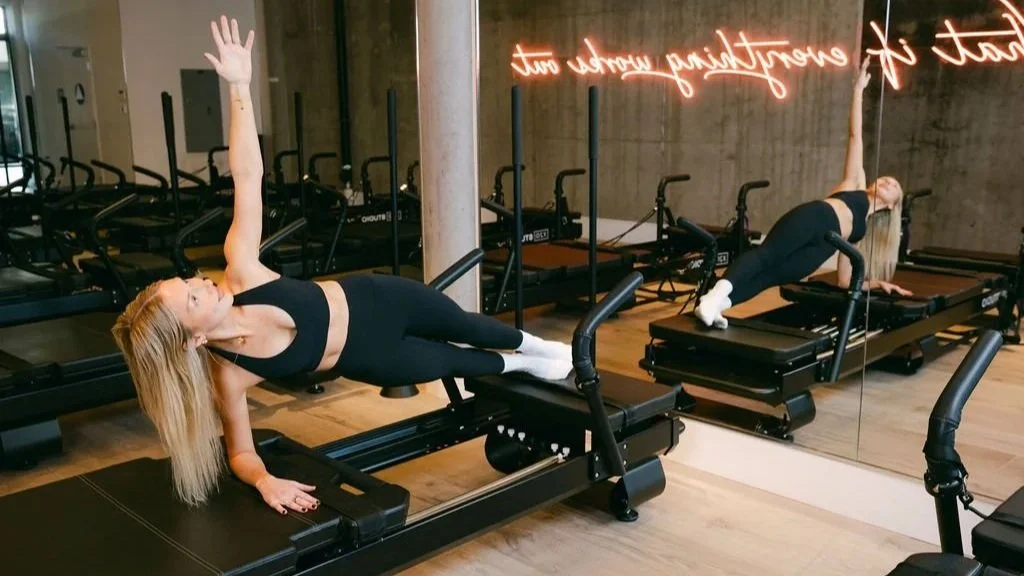
Pilates or yoga? If you're deciding where to spend your precious workout hours, the honest answer is that they're built for different jobs. Yoga is the better choice for flexibility, stress relief, and mind-body practice. Pilates is the better choice for core strength, muscle tone, and changing your body composition.
We teach Pilates every day at our Bay Area studios, so we have a horse in this race. But we'd rather you pick the right practice for your goals than pick us for the wrong reasons. Here's the full comparison.
The quick answer
Choose yoga if your main goals are flexibility, stress management, and a slower practice you can do anywhere.
Choose Pilates if your main goals are core strength, muscle definition, posture, low-impact conditioning, or recovering strength after injury or pregnancy.
Plenty of people do both. They complement each other beautifully.
Pilates vs yoga at a glance
| Pilates | Yoga | |
|---|---|---|
| Primary goal | Core strength, stability, body composition | Flexibility, balance, stress relief |
| Origin | Joseph Pilates, early 1900s | Ancient India, 5,000+ years |
| Equipment | Mat or machines (reformer, XFormer) | Mat, optional props |
| Intensity | Low to very high (machine classes) | Gentle to vigorous (style dependent) |
| Impact on joints | Very low | Very low |
| Calorie burn | Moderate to high in machine classes | Low to moderate |
| Mental focus | Concentration and control | Breath, meditation, mindfulness |
| Best for | Toning, posture, athletes, postpartum | Mobility, anxiety, recovery days |
What is Pilates?
Pilates is a strength-and-control method built around your core: the deep abdominal, back, and pelvic muscles that stabilize everything else you do. Movements are slow and precise, performed on a mat or on spring-resistance machines.
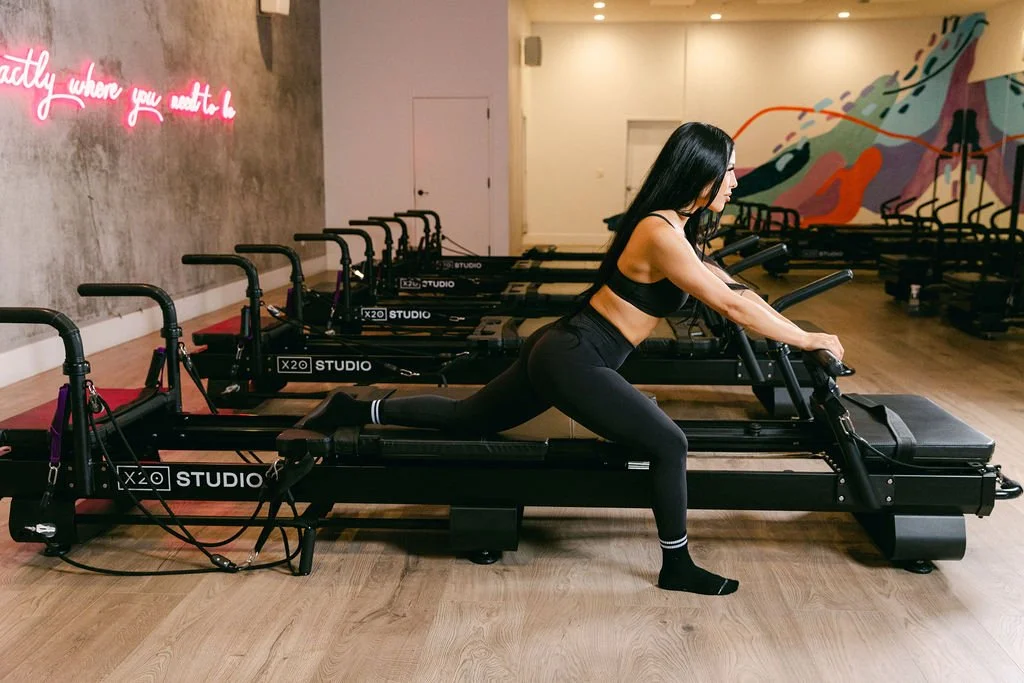
Machine Pilates is where intensity scales up dramatically. At x2o, classes run on the XFormer, a spring-resistance machine that turns classical Pilates principles into a 45-minute, high-intensity, full-body workout. Your muscles stay under tension the entire class, which is what drives the strength and body-composition results Pilates is known for, while staying gentle on your joints and spine.
Pilates is best for: core strength, visible muscle tone, posture, low-impact conditioning, pre- and postnatal fitness (with your doctor's okay), and athletes cross-training around joint stress.
What is yoga?
Yoga is a mind-body practice thousands of years old, combining physical postures, breath work, and meditation. Styles range from slow and restorative (yin, hatha) to sweaty and athletic (vinyasa, power yoga).
What makes yoga special isn't just the stretching. The breath-led pacing genuinely downshifts your nervous system, which is why so many people treat their mat time as therapy as much as exercise.
Yoga is best for: flexibility and mobility, stress and anxiety relief, balance, gentle recovery days, and anyone who wants a practice rather than just a workout.
The 7 real differences
1. Strength vs flexibility. Pilates loads your muscles against resistance; yoga lengthens them through held postures. Both improve the other a little, but neither replaces the other.
2. The core. Both work your core, but Pilates is built on it. Every Pilates movement starts from core engagement, which is why it's the go-to for flat-stomach strength, back pain prevention, and postpartum rebuilding.
3. Calorie burn and body composition. Machine Pilates classes keep your heart rate elevated and your muscles under constant tension, triggering an afterburn effect that mat yoga generally doesn't match. If body recomposition is the goal, Pilates wins.
4. The mental component. Yoga wins here. Pilates demands concentration, but yoga's breath work and meditation are a dedicated practice for your nervous system.
5. Equipment and setting. Yoga needs a mat and floor space anywhere. Pilates at its most effective needs a machine and an instructor, which is exactly why studio classes with hands-on coaching get results home workouts don't.
6. Progression. Yoga progresses by deepening postures over years. Pilates progresses by adding spring resistance, so you can measurably increase the challenge class to class.
7. Injury and rehab. Both are low-impact, but Pilates was literally invented for rehabilitation, and adjustable machine resistance lets instructors scale any exercise around an injury. Tell your instructor and check with your doctor first either way.
Which should you choose?
Ask yourself what you want in 90 days:
If the answer is "feel calmer and touch my toes," start with yoga.
If the answer is "feel stronger, stand taller, and see definition," start with Pilates.
If the answer is "all of the above," do Pilates twice a week and yoga once. That combination covers strength, flexibility, and stress in three hours a week, which is realistic for an actual busy life.
Frequently asked questions
Is Pilates harder than yoga? Machine Pilates classes are usually more physically intense than most yoga classes because of constant spring resistance. Power yoga can rival it for effort, but for pure muscle fatigue, a 45-minute XFormer class is hard to beat.
Can Pilates replace yoga, or yoga replace Pilates? Not fully. Pilates won't give you yoga's flexibility and meditation benefits; yoga won't give you Pilates' strength and body-composition results. They're complements, not substitutes.
Which is better for weight loss? Pilates, particularly machine-based classes, burns more calories and builds more lean muscle, which raises your resting metabolism. Diet still does most of the heavy lifting for weight loss.
Which is better for back pain? Both can help. Pilates has the stronger track record because it directly strengthens the deep core muscles that support the spine. Get cleared by a doctor first, and tell your instructor.
Is Pilates or yoga better for beginners? Both welcome beginners. The advantage of a small Pilates class is the coaching: at x2o instructors give hands-on adjustments, so you're never guessing whether your form is right. Come 10 minutes early to your first class and we'll walk you through the XFormer. More first-timer answers in our FAQ.
Try a Pilates class in the Bay Area
If this comparison tipped you toward Pilates, try the real thing: 45 minutes on the XFormer with a coach who knows your name, at x2o Studio in Los Gatos, Danville, or Fremont.